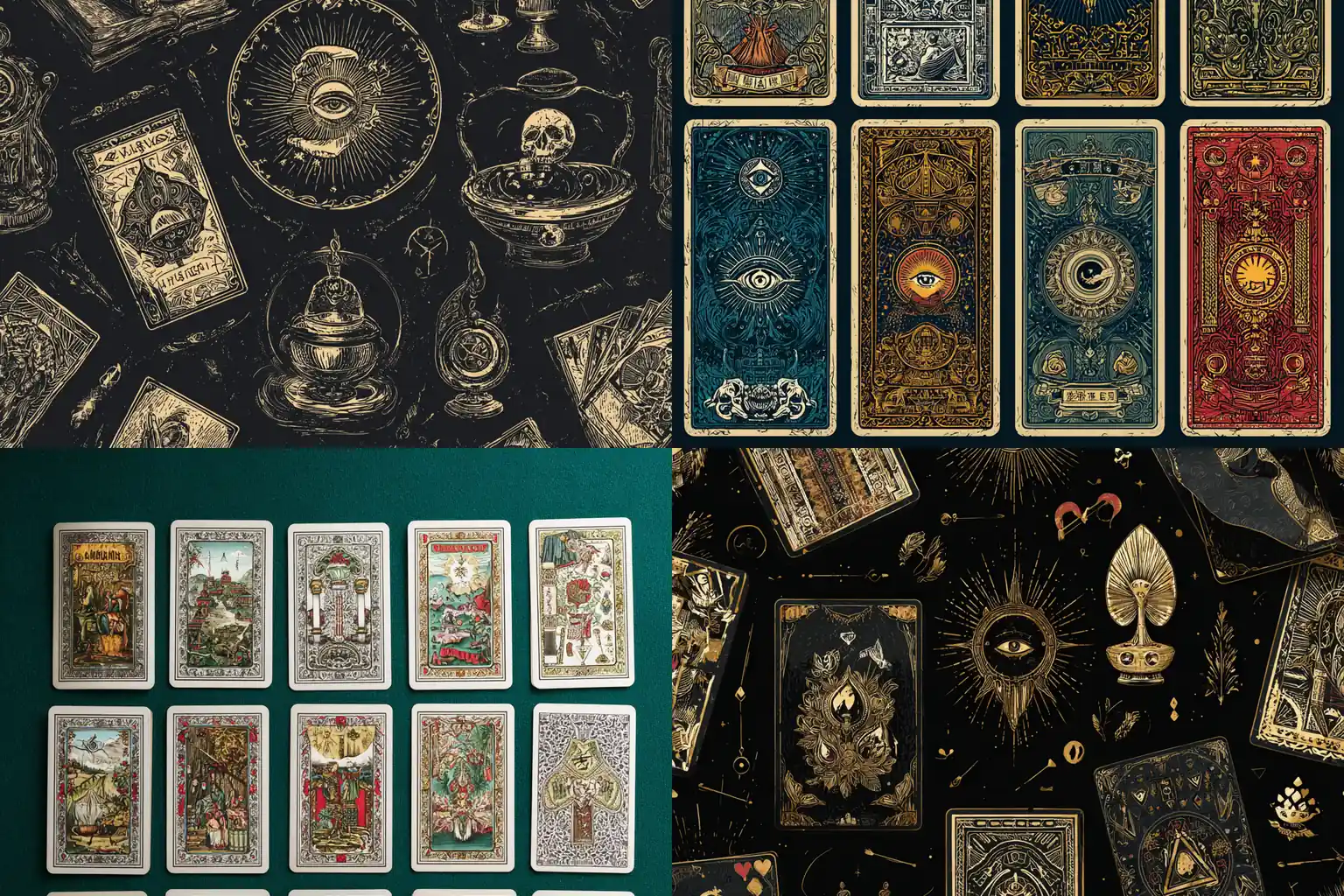
Knowing how the 78 tarot cards are structured is the foundation of reading them. Once you understand each card's symbolism and where it sits in the deck, spread messages become far easier to interpret. The Major Arcana speak to major life lessons, the Minor Arcana reflect day-to-day details, and the tarot court cards stand for people and personality traits.
Below, the Major Arcana and the four Minor Arcana suits are organized side by side, with a closer look at what court cards do and how to use them. Alongside the meanings, you'll find practical ways to judge a card in context and common misreadings to avoid, so you can read with more confidence.
Whether you're a beginner who wants a fast overview of all 78 meanings or you already know the basics and want to go deeper, this guide gives clear, concrete pointers for the next steps on your tarot path.
Key takeaway: this guide covers all 78 tarot cards, including the 22 Major Arcana, the 56 Minor Arcana (Wands, Cups, Swords, Pentacles) and the court cards, with side-by-side meanings. Systematic grouping and concrete examples help you grasp each card's core message and apply it to love, career and other situations.
How the 78 Tarot Cards Are Structured
A tarot deck contains 78 cards split into two parts: the Major Arcana and the Minor Arcana. The Major Arcana has 22 cards that symbolize key spiritual lessons and turning points, running from The Fool to The World, each with its own symbolism. The Minor Arcana has 56 cards divided into four suits: Wands, Cups, Swords and Pentacles, generally linked to action, emotion, thought and the material world.
Each Minor Arcana suit runs from Ace to Ten, plus four court cards (Page, Knight, Queen, King), for 14 cards per suit. Court cards represent people or personality traits and often describe the characters who show up in a reading. Knowing these groupings helps you locate a card's meaning quickly and read the spread as a whole.
Major vs. Minor Arcana
The Major Arcana usually reflect major events, spiritual growth and life lessons. Their imagery is rich in symbolism and suits deeper questions. The Minor Arcana focus on concrete everyday situations, with each element covering a different area of life, helping you understand your current circumstances and emotional state.
The Special Role of Court Cards
Court cards play an important role in the Minor Arcana, representing specific people, personalities or attitudes. The Page is generally read as news or youthful energy, the Knight as drive and adventure, the Queen as emotion and intuition, and the King as control and authority. Through court cards, you can spot particular people or energy dynamics in a reading.
Core Meanings of the 22 Major Arcana
The Major Arcana are the most symbolic and layered part of the tarot. The 22 cards, from 0 The Fool to 21 The World, trace the stages of a life journey. Each one stands for a state of mind, a life lesson or a universal principle, and they are key to reading major turning points and inner growth.
When learning the Major Arcana, go beyond memorizing keywords and get to know the symbols and story on each card. Death, for example, isn't generally read as literal death but as endings and renewal, a reminder to welcome change.
- The Major Arcana reflect key life lessons and spiritual growth
- Each card's symbolism is best understood together with its imagery
- Meanings go beyond the literal and carry deeper symbolism
Grouping the Major Arcana by Theme
The Major Arcana can be seen in three stages: beginnings (The Fool, The Magician), trials (The Hierophant, Strength) and completion (Judgement, The World). Each stage reflects different challenges and growth, helping you read a spread from a big-picture view.
Examples of Common Major Arcana Meanings
The Fool is generally read as a new journey and open possibilities; The Lovers as choices and relationships; Justice as fairness and cause and effect; The Hermit as introspection and wisdom. Knowing these core meanings helps you catch a spread's central message quickly.
The 56 Minor Arcana: Wands, Cups, Swords and Pentacles
The Minor Arcana are made up of four suits of 14 cards, each covering a different area of life. Wands belong to fire and symbolize drive and creativity; Cups belong to water and stand for emotion and intuition; Swords belong to air and represent thought and conflict; Pentacles belong to earth and relate to material and financial matters. Each suit runs from Ace to Ten plus the court cards, covering a wide range of everyday situations.
When learning the Minor Arcana, look beyond basic number meanings to each suit's element and how the suits interact. Minor Arcana meanings are more practical and work well for reading daily life, work and relationships.
Wands: Meaning and Symbolism
Wands represent passion, adventure and momentum. The number cards describe plans, challenges and the road to success, while the court cards show different kinds of doers. Wands often appear when a decision or creative push is needed.
Cups: Meaning and Symbolism
Cups focus on feelings, relationships and the inner world. The number cards trace emotional growth, fulfillment and loss, while the court cards stand for people with different emotional qualities. Cups help with reading love and personal connections.
Swords and Pentacles
Swords symbolize thinking, conflict and decisiveness; their number cards reveal mental processes and challenges, and their court cards represent rational or impulsive people. Pentacles center on material life, money and stability; their number cards describe finances and the fruits of effort, and their court cards stand for practical managers or protectors.
Tarot Court Cards: Roles and the People They Represent
Tarot court cards describe people, personalities and energies. They come in four ranks: Page, Knight, Queen and King. Each rank takes on a distinct character in each suit, helping you identify the people or energy dynamics appearing in a spread.
Court cards don't only point to specific people; they can also stand for an attitude or state. The Knight of Wands, for instance, is generally read as bold action and a spirit of adventure, the Queen of Cups as gentleness and emotional depth, and the King of Swords as reason and authority. Understanding these layered meanings adds depth to your readings.
The Layered Meanings of Court Cards
A court card can represent a real person, such as the querent or someone around them, or an energy, such as the fresh start of a Page or the command of a King. In a reading, combine the card's position with the question to decide which role it plays.
How to Identify Personality Types in Court Cards
A court card's rank and suit element hint at a person's character and behavior. The Page of Cups, for example, often describes a sensitive, understanding young person, while the Knight of Swords may be a logical, decisive go-getter. This framework helps you picture the people involved in a reading.
Common Tarot Misconceptions and a Better Way to Judge
Many beginners assume card meanings are fixed and rigid, overlooking how cards interact and how much the question matters. A reading should weigh the spread, the querent's situation and the card combinations together, rather than treating each card's keyword in isolation.
Another common mistake is treating reversed cards as purely negative. Reversals may point to blockages, inner challenges or a gentle warning, and should be read in context. Building a sound framework and accepting that meanings are layered and flexible is key to clearer readings.
- Read meanings in light of context and spread position
- A reversed card doesn't mean bad luck; read it flexibly
- Avoid rote memorization; combine symbolism with intuition
Misconception 1: Meanings Never Change
A card's meaning shifts with its position, the surrounding cards and the question asked, so textbook definitions can't be applied mechanically. Meanings are symbolic guidance that call for flexible interpretation.
Misconception 2: Reversals Are Always Negative
Reversed cards are often mistaken for bad luck or failure, but they can indicate inner resistance, reflection or untapped potential. Read them together with the whole spread and the background of the question.
Putting the 78 Cards to Work in a Reading
Once you know the 78 meanings, applying them means combining the question's background with the spread's structure and reading the cards as one story. Start with a clear question, then pick a suitable spread, such as a three-card past-present-future layout or a cross spread, and work through each card and how the cards relate.
As you read, pay attention to upright and reversed positions, suit elements and court card symbolism, and weigh them together. With practice and by comparing real examples, your readings gradually become clearer and more fluent.
Asking Good Questions and Choosing a Spread
A clear, specific question keeps the cards focused and avoids vague answers. The right spread helps you read systematically: a three-card spread suits a quick look at a situation, while a cross spread digs into several layers of an issue.
Combining Cards Into One Reading
A single card is only a clue; the full message comes from how the cards in a spread combine. Watching element relationships, number links and the roles of court cards can reveal a deeper story and guidance.
The Limits of Tarot Interpretation
Tarot can offer guidance and insight, but it is not an absolute tool for predicting the future. Interpretation is subjective, shaped by the reader's experience and intuition and by the querent's state of mind, so results can be read in more than one way. Understanding tarot's limits helps you view a reading with a level head and avoid over-relying on it.
Tarot also cannot replace professional medical, legal or financial advice; for serious matters, seek qualified help. Treat tarot as a supporting tool alongside your own judgment and action, and that's where its value lies.
Want to see what the cards mean in your own situation? Bring the question on your mind and draw three cards. It usually says more than reading keywords alone.
Start a Tarot Reading