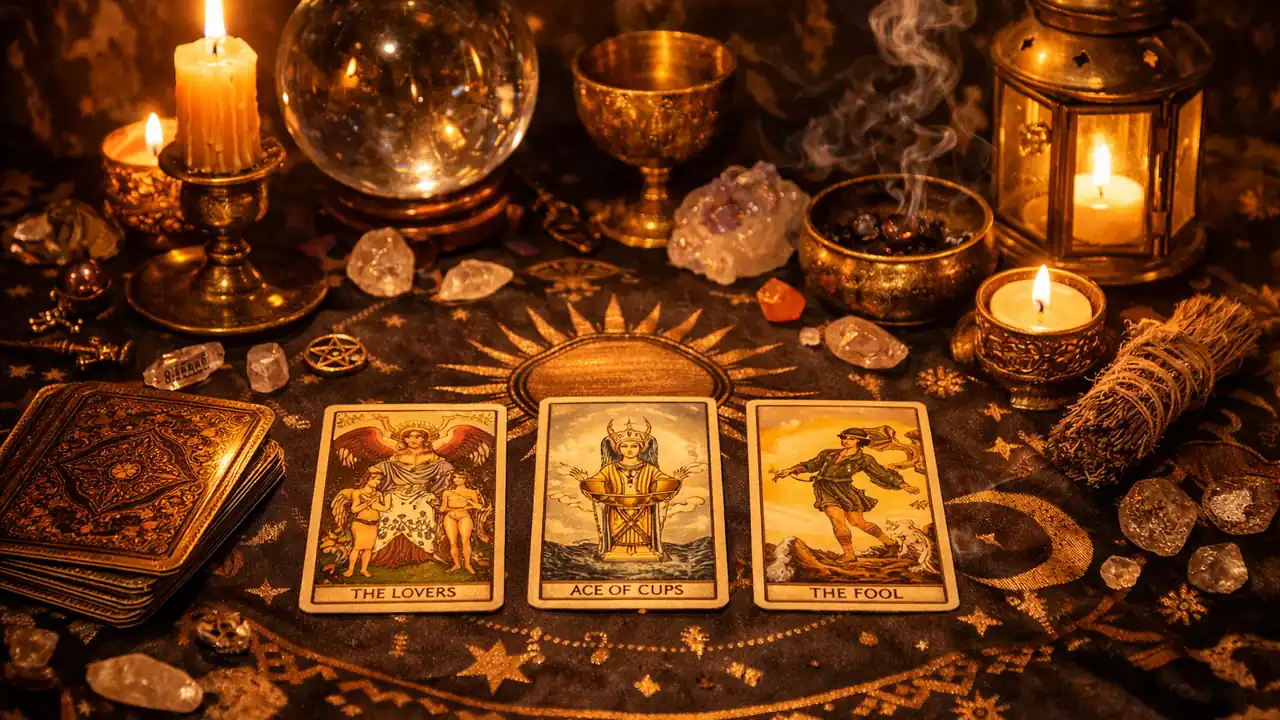
Drawing one morning card each day is a simple way to check in with yourself and get a pointer for the day ahead. It helps you notice your mood and energy more clearly. Used well, a daily tarot card draw can give you a calm moment in a busy life and help you trust your intuition more.
The method is simple: at the same time each morning, in a quiet spot, shuffle and draw one card. Look at the image and your first impression, then check the meaning, and finally write down one thing to watch today. Check back in the evening. Ask things like "What do I need to pay attention to today?" or "How can I adjust my mindset to face today's challenges?" These work better than "Will I succeed today?"
Whether you are new to tarot or want to deepen a daily draw habit, the sections below give you a clear path and practical tips for using your tarot card of the day as a quiet guide through daily life.
Key takeaway: a morning card points to something to watch today. It does not predict your day. Ask open questions such as "What do I need to pay attention to today?", write down one reminder after drawing, and compare it with your day in the evening. If The Tower or the Ten of Swords appears, there is no need to panic. Just turn it into one small thing you can do today.
What a Morning Card Means and What It Does
A morning card is a single tarot card drawn each morning as a pointer for the day or a hint about its energy. The one-card-a-day habit is more than a reading. It is a small ritual for listening to your inner voice. With a morning card, you can quickly notice your inner state, possible challenges and openings at the start of the day, and adjust your mindset and plans.
A morning card is not mainly about predicting the future. It is more useful as present-moment support and a starting point for reflection. It helps you build intuition and a connection with the cards, and it becomes a daily tool for self-awareness. The habit supports inner growth, gives your daily choices more grounding, and can offer some steadiness when you feel stressed or confused.
The Morning Card and Daily Inner Connection
Drawing the card is itself a quiet ritual. It helps you move from sleep into wakefulness and turns your attention to the day's goals and challenges. That sense of ritual keeps the daily draw from becoming an empty routine and makes it a steady anchor in your day.
By working with a card every day, you become more aware of your emotional shifts and hidden needs, so you can adjust your behavior and attitude early and feel more in charge of your day.
The Many Uses of a Morning Card
Beyond emotional guidance, a morning card can spark ideas, help you focus on a problem, or support a decision. It invites you to take in its message with an open mind and use it to reflect and act in different areas of daily life.
It also helps tarot learners get familiar with card meanings. Daily practice deepens your understanding of each card and trains your intuitive reading.
How to Read Your Daily Card and Where It Applies
To read a morning card, combine the card's meaning with your own situation today. The meaning is the base, but do not stop at the literal reading. Bring in what is actually happening in your day, your mood and your question to get a concrete, useful pointer.
A morning card usually applies to adjusting your mindset for the day, managing emotions and remembering important events. It is not suited to long-range or complex predictions. It focuses on what you can control right now and helps you make wiser choices in everyday life.
Combining Card Meaning With Your Situation
For example, Temperance is generally interpreted as balance and blending. But if you are dealing with conflict at work or at home that day, its message may be a reminder to stay calm and patient, not just a general sign of harmony.
So when you read your morning card, first ask yourself: What are the important situations today? What is my mood, and what am I up against? How does the card reflect these things?
If you cannot remember a single card's meaning, start from the suit to see what the day is pointing you toward:
Suit | What to watch today
Wands | Action and drive: a good day to start things, but watch for impatience
Cups | Emotions and relationships: pay attention to how you and the people around you feel
Swords | Thoughts and communication: say things clearly and do not let worry spiral
Pentacles | Work, money and body: handle practical matters and look after your routine
Major Arcana | A deeper theme today, worth pausing to think about
What It Fits and Where It Stops
A morning card is good for adjusting your mindset, flagging things to watch and setting the tone for the day. It should not be the only basis for a major decision. For complex questions, use a multi-card spread to break the situation into parts.
Also, a morning card is not a fixed prophecy. It is guidance for the moment, and in the end your own judgment and actions decide what happens.
Common Myths About the Morning Tarot Card
Many people think a daily draw must give a clear answer, or the reading has failed. In fact, a morning card is about prompting thought and self-awareness, not mechanical prediction. A vague or uncertain message often invites you to look more deeply within.
Another common mistake is relying too heavily on the daily card and forgetting your own judgment and action. Tarot is a support tool, not a substitute for real-life decisions. Too much dependence can lead to anxiety or hesitation.
Myth One: Looking for a Definite Answer
A morning card's message is mostly symbolic and suggestive. If you expect it to hand you a concrete action plan every day, you will often be disappointed. The ambiguity of a card is exactly what pushes you to think for yourself.
A better attitude is to treat the daily card as a source of inspiration, weigh it against your situation, and decide from there rather than accepting it wholesale.
Myth Two: Giving Up Your Own Agency
Tarot cannot replace your choices and effort. If you lean on the morning card too much, you may lose your sense of control and become dependent on it. The daily draw should help you decide, not decide for you.
Keep thinking and acting for yourself. That is how a morning card becomes truly useful.
How to Do a Morning Draw and Ask Good Questions
The key to a morning card habit is a fixed time and setting. After you wake up, find a quiet spot, take a few deep breaths to settle your mind, and then draw. This helps you focus on the link between the card and how you feel inside.
When it comes to questions, avoid anything too vague or complicated. Focus on your mindset, emotions, energy or a simple pointer for the day, such as "What should I pay attention to today?" or "What is my main challenge today?" This makes the card's message more concrete and practical.
Step by Step
1. Choose a fixed time (morning is best) and a quiet place.
2. Shuffle while focusing on how you are today.
3. Silently ask a simple question, or stay open.
4. Draw one card and look carefully at the image and how it makes you feel.
5. Check the meaning and read it against your own situation.
6. Write down the card and your reading so you can look back later.
Keeping a record helps you see links between your daily cards and what happens in your life, and it deepens your intuition and understanding.
Examples of Good Questions
Avoid closed questions like "Will I succeed today?" because the answer is too simple and limits your thinking. Instead ask open questions such as "How should I adjust my mindset to face today's challenges?" or "What details do I need to watch today?" These draw out more insight.
Asked this way, the morning card is less a prediction tool and more a guide for how you act today.
Limits of a Morning Card Reading
A morning card is convenient and practical, but it has limits. It only reflects your current energy and mood and cannot replace a full spread. For complex or major questions, use the morning card with care and look for a deeper reading method.
Reading a morning card also depends heavily on your intuition and experience, and beginners may misread cards they do not yet know well. Keep learning and practicing, and your readings will fit your life more and more closely.
- A morning card suits daily emotional check-ins, not complex decisions
- Reading depends on intuition and experience, so beginners need steady practice
- Ambiguous meanings are not absolute; you still need to use your own judgment
- Major events call for a multi-card spread or professional help
Morning Card Examples and Practical Tips
Take Strength as an example. It is generally interpreted as courage, inner power and self-control. If you face difficulty or pressure that day, the card reminds you to trust your ability, stay calm and persistent, and meet the challenge head on.
Another example is The Hermit, which stands for looking inward and seeking truth. It may suggest that today is a good day to step back, quiet down and reflect, rather than being too outgoing or rushing into action.
Example One: Strength
When you feel anxious or powerless, drawing Strength in the morning is encouragement. It reminds you that you have enough inner resources to get through. You might set your goal for the day as staying patient, facing challenges actively, and not giving up too easily.
Linking the card to your mood this way helps you adjust your attitude and get moving.
Example Two: The Hermit
The Hermit suggests today suits quiet and reflection. If you can, schedule a little less socializing, and let big decisions wait until you have thought them through. Set aside some time alone to sort out your thoughts and listen to yourself.
This message helps you avoid acting on impulse, raises your self-awareness and gives future decisions more depth.
What If You Draw The Tower, the Ten of Swords or The Devil
Drawing one of these in the morning can leave you waiting all day for something bad to happen. Remember first: a morning card points to something to watch today, not a coming disaster. The Tower can be read as "plans may get disrupted today, so leave some room to adjust." The Ten of Swords says "stop forcing something that has already reached its limit." The Devil reminds you to "notice the habits you cannot let go of, such as endless scrolling or checking someone's messages again and again." Turn the card into one small thing you can do today and check back in the evening. You will often find it was gentler than you feared that morning. And do not draw another card out of unease to "cover" it. That only makes you dwell on it more.
Want to know what to watch most today? Focus on one specific question and draw for it. That is more useful than reading a generic daily horoscope.
Draw for your question