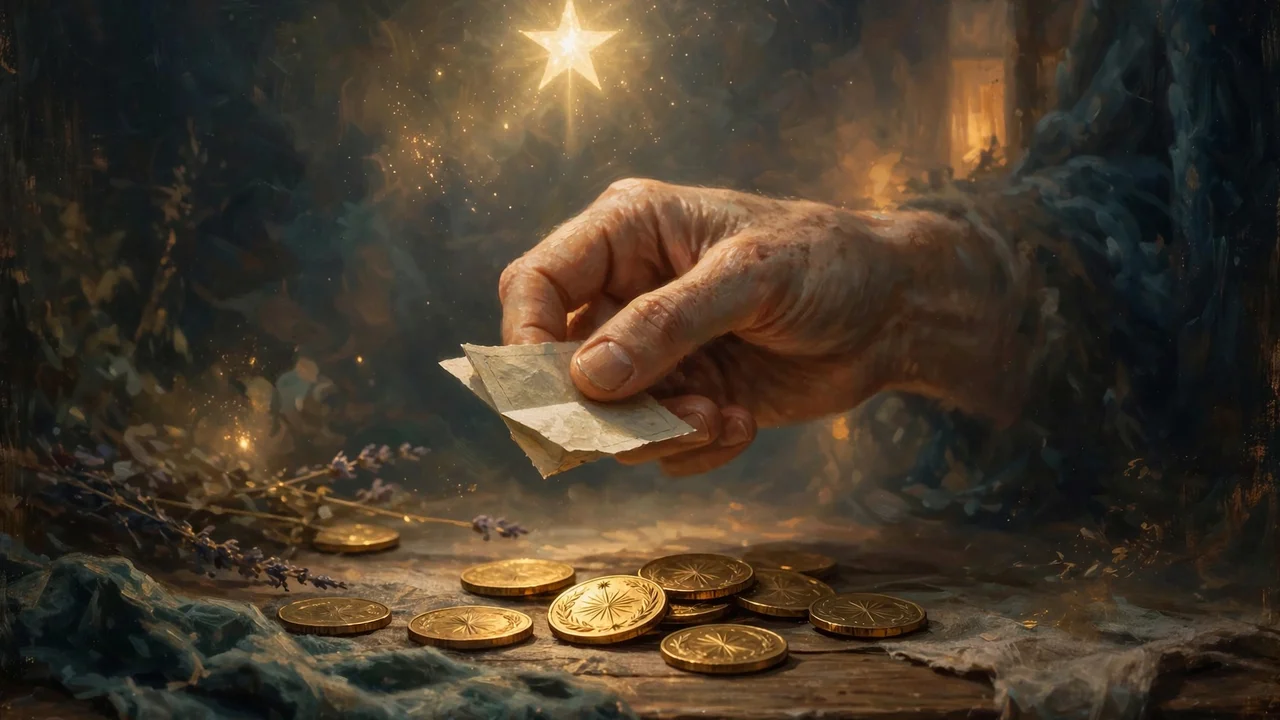
Most people who ask tarot about windfall luck want to know one thing: will I win this time? Tarot will not tell you which numbers to pick, and it cannot promise that any draw will go your way. What the lottery machine draws has nothing to do with the cards you pull. You can still ask about windfall luck, though. Maybe you want to understand why you keep hoping for unexpected money, why you buy extra tickets every time the jackpot rolls over, or why spending sometimes leaves you feeling emptier than before. Those questions are about you, and they are a good place to start a tarot reading. The cards can help you put vague feelings into words and notice the habits and emotions that come up around money. You stop chasing a number and start to see what you hope the money would fix, and that is something you can work with.
So the boundary for tarot lottery luck questions is simple: you can ask about yourself, but not about the draw machine. You can ask whether your hope of winning has grown too heavy, whether lottery spending is crowding out everyday needs, or whether your recent purchases are filling some kind of gap. Do not ask for winning numbers, for which draw will hit the jackpot, or simply "will I win?" The sections below first separate earned income from windfall luck. Then they go through the questions that help and the ones that only feed anxiety. After that come the most common myths about winning, and three questions worth asking yourself before you buy a ticket. Each part should leave you with something to do rather than something to wait for. Tarot is a tool for reflection, not a forecast service, and a reading works best when the question puts you at the center.
What Windfall Luck Means and How It Differs from Earned Income
Earned income is the steady money you get from work: a salary, freelance fees, or revenue from a business you run. It is tied directly to the time and skills you put in, so you can usually expect it and plan around it. Windfall luck covers money that comes from outside your work and outside your expectations. Typical examples are lottery wins, scratch card prizes, raffle prizes at a company party, giveaways, or a bonus you never saw coming. In every case, whether the money arrives, when it arrives and how much it is are all out of your hands.
Many people also count investment gains as windfall luck, and that needs untangling. Investment returns do not fall from the sky. Behind them are the money you put in, the research you did and the risk you accepted, and investments can lose money too. If you treat investing as a game of chance, it is easy to ignore that risk. After one lucky gain you might believe you are on a hot streak and keep putting in more. Investing carries risk, so please consult a qualified professional for specific decisions. Tarot will not tell you what to buy or sell.
When people talk about windfall luck, then, the most accurate scope is income that depends purely on chance, where your only decision is whether to take part. The lottery is the classic example. For work income and your wider financial direction, see the overview on whether tarot can answer money questions. This guide covers only windfalls and the lottery, and what tarot can and cannot help with there.
Why Tarot Does Not Give Winning Numbers
Every lottery draw is random. Each number has the same chance of being drawn, and what came up last time has no effect on the next draw. The odds of hitting the jackpot are extremely low. They do not change based on which cards you pull, what time you buy a ticket or which shop you buy it from. Tarot cannot see through that randomness. It is not a number generator, and it does not give you inside information about the next draw.
A common way to think about tarot is as a mirror. You bring a question and pull cards, and the images and symbols remind you of things in your own situation. They help you notice emotions, habits and choices you usually overlook. Tarot is good at questions like "what is going on with me right now?" and "what could I change?" It is not good at questions like "what will that machine draw?" Using tarot to guess numbers is like using a mirror to look into the room next door. Accuracy is not the problem. The mirror is pointing the wrong way.
One more point is worth stating plainly. If anyone claims they can use tarot to work out winning numbers, or says a certain card means this draw will pay out, be suspicious of that claim. Tarot does not promise outcomes and should not be used to vouch for anyone's luck. The energy you spend guessing numbers is better spent understanding why you want to win so badly. The cards can actually speak to that.
Windfall Questions Tarot Can Help With
If numbers are off the table, what can you still ask about windfall luck? You can ask about your relationship with money. Windfalls are appealing not only because of the cash, but because they stand for a fantasy of never having to work this hard again. Once you look at that fantasy openly, plenty of worthwhile questions appear.
The first kind is about money habits, such as "What pattern shows up in how I have been spending lately?" or "What do I spend on that leaves me feeling worse afterwards?" Questions like these let the cards reflect your everyday choices back to you. The second kind is about impulse spending, for example "What emotion is behind my urge to buy more tickets whenever the jackpot rolls over?" The third kind is about how heavy your hope has become: "Has my hope of winning started to feel like pressure?" The fourth kind is a mindset check: "What role does buying lottery tickets play in my life right now?"
In all of these, the subject is "I". They ask about how you are now and what you could change, not whether some outside event will happen. The more specific the question, the easier it is for the cards to connect with your situation. If you are not sure how to turn a vague thought into a good question, start with how to ask tarot questions. It shows how to rewrite closed questions as open ones. Three cards for "where I am, what is in the way, what I can do" are usually enough to explore a windfall mindset question.
Spotting Impulse Spending Patterns in the Cards
Impulse spending and lottery tickets often come from the same place: a wish to change how you feel right now. When you are worn out at work, being compared with others or stuck in a rut, spending some money or buying a few tickets gives you a brief rush of anticipation. The trouble is what is left once that feeling fades: often a thinner wallet and a deeper sense of helplessness.
The suit of Pentacles is generally interpreted as relating to material things, the body and everyday resources. If you ask about spending habits and draw the Four of Pentacles, a common reading is that it is about holding on tight. You grip your money and you grip a sense of safety, and the card may hint that your saving is driven by a fear of losing what you have. To explore where that need for safety comes from, read the Four of Pentacles and money security. The Nine of Pentacles reversed is often read as a shaken sense of independence. It may invite you to check whether you are resting your financial security on other people or on a lucky break. That theme is covered in the Nine of Pentacles reversed and financial dependence.
Whatever card appears, what matters is not whether it is a good or bad card, but which spending moments it brings to mind. Try writing down the last three times you bought tickets or made an impulse purchase. Note your mood, the timing and what was happening around you. The pattern usually hides in those repeated details, and the cards just help you turn on the light.
Is Your Hope of Winning Getting Too Heavy?
Some people buy a ticket purely for fun and laugh it off when the numbers come out. Others sleep badly before the draw, feel low all day afterwards, or start treating the next draw as their only chance to turn their life around. The ticket is the same, but the weight people put on it can be completely different.
You may often picture how you would spend a win, which debts you would pay off or which job you would quit, and those daydreams may be coming more often. If so, pause and ask: is this hope carrying some pressure I do not want to face right now? Tarot can help by making the shape of that pressure clearer. You might ask, "What does my hope of winning say about what I most want to escape from right now?" The cards may remind you of exhaustion at work, worry about debt or uncertainty about the future.
Money anxiety is very common, and you do not need to blame yourself for it. For more ways to put these feelings into questions, see tarot questions for money anxiety. If the anxiety is affecting your sleep, appetite or health, please see a doctor. Tarot can describe how you are doing, but it does not replace medical care. Bringing your hope back to a reasonable level does not mean giving it up. It means you can still live well in the present while you wait for the draw.
Three Kinds of Questions Tarot Cannot Answer
Setting clear limits is the most important step when you ask about windfall luck. Tarot does not answer the following three kinds of questions, and it should not try to.
The first is asking for winning numbers, such as "Give me the numbers for this draw" or "Which number is lucky for me?" This treats tarot as a number generator. The numbers on the cards are symbols that belong to each card's meaning and have no link to lottery results. Picking numbers from the cards is just another way of picking at random.
The second is asking which draw will win, for example "Will I win the draw next month?" or "Should I wait for the jackpot to grow before I buy?" Tarot cannot predict when a random event will happen, and any claim that one particular draw gives you a better shot has no basis.
The third is asking "Will I win the jackpot?" It looks like the most direct question, and it is also the one people most often get stuck on. Even if the cards look bright, say the Wheel of Fortune or the Sun, they are generally interpreted as being about change, energy or mood, not about winning. In the same way, a heavy-looking card does not mean you are shut out of windfalls for life. No card means you will definitely win, and tarot does not promise outcomes.
If you still feel the urge to ask, turn the question around. Instead of "Will I win?", try "If I do not win, how do I want to handle the disappointment?" The cards can say something useful about that question.
Three Common Myths About Winning
Talk about windfall luck for long enough and a few popular beliefs always come up. They sound reasonable, but they often push people to buy more and more.
The first myth is "I have a feeling this is the one." That strong hunch is a real emotion, but an emotion is not a signal. When we hope for something, we tend to read coincidences as signs: dreaming of a number, seeing it on a license plate, or just being in a great mood. Those feelings deserve respect, but you should not bet on them, because the draw machine cannot sense your mood.
The second myth is "If I keep buying, I will win eventually." This is the classic sunk cost trap. You have already spent so much that stopping now feels like wasting all of it, so you keep going. But every draw is independent, and the tickets you bought in the past do not add up to a better chance next time. The harder you try to win back what you spent, the more you are likely to put in.
The third myth is "Winners always say they had a premonition." The stories you hear come mostly from people who won. Far more people had a premonition and did not win, but nobody reports on them. These stories were picked after the fact, and they prove nothing about premonitions.
Tarot can help by giving you a chance to pause when these myths are steering you. Before you draw, write down what you are thinking. Then compare it with the cards and ask whether you are making a choice or being carried along by emotion.
Three Questions to Ask Yourself Before Buying a Ticket
If you decide to buy a lottery ticket, that is entirely your choice. Before you hand over the money, three questions can help you check where you stand.
First: is this spare money? Spare money is what is left after rent, living costs, bills, debt repayments and essential savings: money you would not miss if it were gone. If the ticket money comes out of your food budget or next month's rent, it is no longer entertainment. You are putting your daily life at risk.
Second: would losing it affect your life? Picture the case where nothing wins. Would you eat or sleep worse, argue with family, or need to borrow money to get by? If the answer is yes, this spending is already more than you can comfortably afford to lose, and it would be wise to stop for now.
Third: have you made the lottery your only way out? When life feels stuck and work offers no clear path, pinning your hopes on the jackpot is a very human reaction. But if that hope replaces other steps, like looking for a new job, learning a new skill or sorting out debt, it becomes a way of putting things off. The odds of winning are extremely low, and there is more than one way forward in life.
These three questions also work well in a reading. Pull three cards, one for each question, notice what the images bring to mind, and then answer yourself honestly. Nobody else needs to see your answers. What matters is that you are honest with yourself.
Turning Windfall Questions into Better Questions
Most people start with very similar windfall questions: "Do I have any windfall luck coming?" or "Will I win this draw?" There is nothing wrong with those thoughts, but they are hard for the cards to answer in a way you can act on. Try rewriting them so that you are the subject, the focus is on the present and the answer points to something you can change. The reading will feel much more grounded.
For example, "Do I have any windfall luck coming?" can become "What does my recent hope for unexpected money say about what I feel is missing financially?" "Will I win this draw?" can become "How is the way I feel when I buy tickets connected to the way I handle stress?" And "Was I just born without money luck?" can become "Which of my money habits could I start changing right now?"
Once rewritten, the question is no longer about waiting for a result. It is about looking at yourself. If you wait for a result, all you can do is wait for the draw. If you look at yourself, you have something to do as soon as the reading ends: track your spending for a month, set a monthly limit for fun spending, or stop for a moment before deciding to buy a ticket.
For the bigger financial picture, read this alongside the 2027 wealth tarot guide. If you still wonder whether tarot should touch money questions at all, revisit whether tarot can answer money questions. Tarot is not responsible for bringing you good fortune, but it can help you take better care of both your money and your peace of mind.
References
Bring a real question about windfall luck or your money habits to a tarot reading and see what the cards bring to mind.
Get a tarot reading