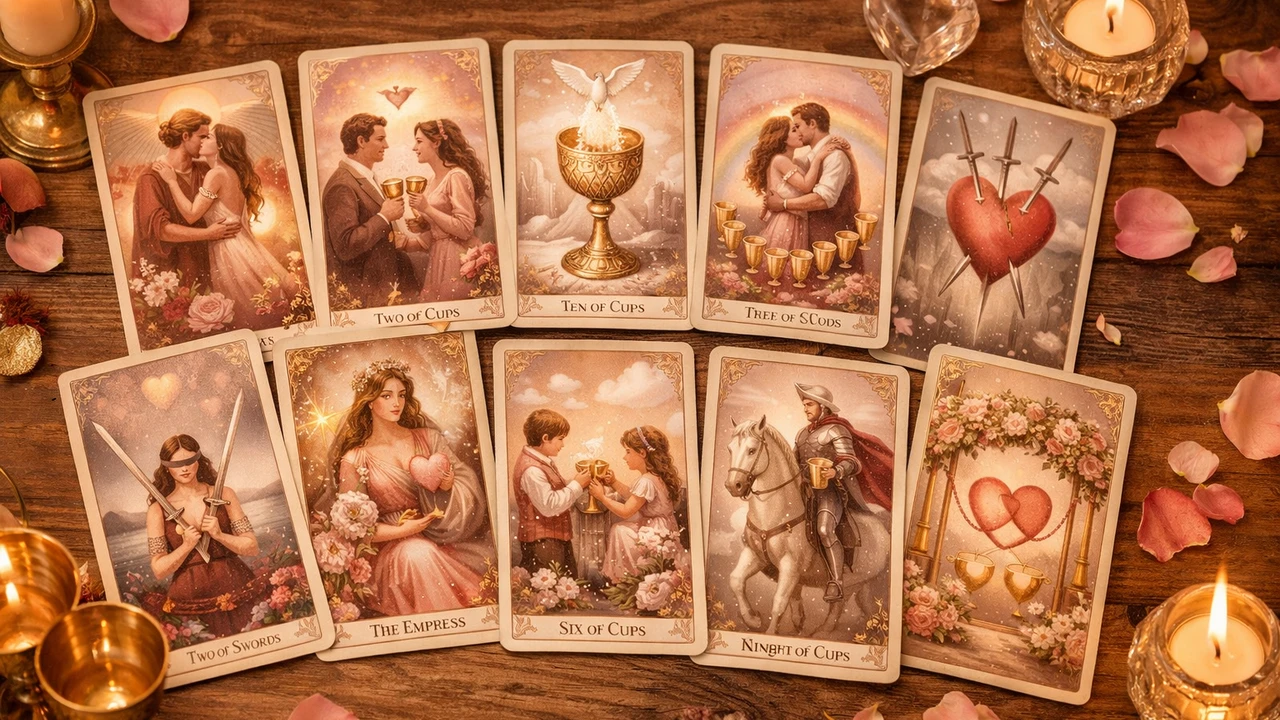
Love readings rarely get stuck because the cards have nothing to say. They get stuck because “do they like me,” “are we compatible,” “will they commit,” “is this a situationship” and “will we get back together” all get folded into one question. The tarot cards that represent love matter because they tend to point straight at the core of a relationship: mutual attraction, shared values, emotional flow, or just a short-lived spark.
If you want a stronger foundation for single-card meanings, pair this with the complete guide to all 78 tarot card meanings. If you're stuck in a situationship right now, you may want to start with does my crush like me back? The love signals tarot shows in the talking stage.
The 10 tarot cards that represent love: which ones show up most
If you only want the short answer, the cards most often read as love and relationship cards are The Lovers, Two of Cups, Ten of Cups, The Empress, The Star, Ace of Cups, Knight of Cups, The Moon, The Devil and Two of Wands. They don't all say the same thing. Some describe the quality of the love, some describe how two people interact, and some ask whether the bond is a genuine connection or something driven by desire, expectation or anxiety. Two of Wands is on the list because so many love questions get stuck on “should I take the next step?”, and that hesitation is exactly what it describes.
In the widely used Rider-Waite deck, Pamela Colman Smith's artwork makes many love signals very concrete: the choice in The Lovers, the exchange in the Two of Cups, the nurturing of The Empress, the uncertainty of The Moon. Reading the images often captures the mood of a relationship right away. If you want to brush up on the basics first, compare with the full guide to the 22 Major Arcana meanings, then come back here for how they work in love readings.
Don't rush to ask which card is “most accurate”
The most common mistake in love readings is looking for one all-purpose “true love” card. The Lovers is often called the love card, but more precisely it's about choice, compatibility and being honest about the relationship. The Ten of Cups is often seen as fulfillment, but it leans toward harmony and a sense of family, which isn't the same as a guaranteed wedding. The Star is beautiful, yet it's more about hope and healing than a commitment that lands right away.
Judge the ten by their function, not their fame
When a card appears, the real question is what role it plays in this relationship. Is it drawing two people closer, or reminding you that you're both still waiting to see? Is it emotional maturity or emotional impulse? Asking this keeps you from reducing cards to “good” and “bad.” A love reading isn't a beauty contest; it's about reading the structure of a relationship.
Here is a quick reference for the core meaning of each card in love, upright and reversed:
Card | Core in love | Upright | Reversed
The Lovers | Choice and compatibility | Mutual attraction and willingness to talk openly about the relationship | Values or pace out of sync; someone avoids commitment
Two of Cups | Equal, mutual attraction | Real exchange; both respond to each other | Uneven effort, cooling contact or misunderstanding
Ten of Cups | Long-term happiness and family feeling | A chance for the relationship to become stable and harmonious | Disappointed hopes; calm on the surface, draining underneath
The Empress | Nurturing and attraction | Rising charm; willing to care and be present | Over-giving or feeling depleted; the relationship lacks nourishment
The Star | Hope and healing | Goodwill remains; the bond is slowly mending | Disappointment lingers; trust is still repairing
Ace of Cups | Emotions opening up | A spark; new feelings starting to flow | Feelings held back; the heart isn't open yet
Knight of Cups | Confessions, invitations, gestures | The other person is making moves toward you | Hot then cold; more words than action
The Moon | Anxiety and unclear sight | Not enough information; check the facts before judging | The fog starts to lift; the truth gradually surfaces
The Devil | Intense attraction and attachment | Desire, obsession, hard to walk away | Starting to see the ties that bind; wanting to break free
Two of Wands | Waiting and the next step | At a crossroads, weighing whether to move forward | Hesitation and delay; plans stalled
The Lovers: choice and compatibility at the heart of love
The Lovers is almost always the center of attention in a love reading, but its most important theme isn't romance. It's choice. Upright, it often suggests clear mutual attraction, values you can actually talk through, and a willingness to put the relationship on the table. In a situationship, The Lovers often hints that you both feel the connection; the key is whether either of you will admit it and move forward. In a relationship, this card cares about whether you can make shared decisions on the big issues.
The Lovers reversed often shows up when two people want to be together but aren't actually aligned: someone is afraid to take responsibility, your paces differ, or things look sweet while your values keep clashing. Many people see it reversed and assume the breakup is final, which is a misreading. More often it means an important decision hasn't been dealt with, and avoiding the conversation only erodes the honesty of the relationship.
Reading it upright
Upright, The Lovers can be read as “there is love, and there is responsibility to choose.” A spark alone isn't enough; the question is whether both people will take responsibility for each other's needs, boundaries and future. Honesty, openness and responding to each other are the heart of this card.
Reading it reversed
Reversed, The Lovers doesn't necessarily mean there are no feelings, only that the feelings haven't been properly aligned. Common situations include indecision, clashing values, someone dodging commitment, or using romance as an emotional outlet. In a reconciliation reading, it often suggests the problems that caused the split were never truly resolved.
- Keywords: choice, compatibility, honesty, responsibility
- Common situations: turning a situationship official, defining the relationship, major decisions
- Pitfall: treating The Lovers as an automatic sign of marriage
Two of Cups and Ten of Cups: connection and emotional fulfillment
The Two of Cups is one of the signature cards for how a couple interacts, and its focus is equality and choosing each other. It isn't only about liking someone; it's about whether two people are willing to offer their feelings, receive the other's, and keep things balanced. In a situationship, the Two of Cups often shows real exchange, attraction and some testing of the waters. In a relationship, it looks like everyday respect and willingness to meet each other halfway. Reading it alongside love tarot: are we right for each other? makes it easier to tell whether “compatible” and “attracted” are really the same thing.
The Ten of Cups represents a fuller emotional satisfaction, often with images of family, security, harmony and a shared life. It's rarely just a brief passion; it asks whether the relationship can grow long-term happiness. But note that the Ten of Cups doesn't mean there are no problems. It's closer to “this relationship has the potential to build a stable, happy structure,” provided both people keep putting in the work. Reversed, it commonly points to a broken picture of the ideal family, disappointed expectations, or harmony on the surface with quiet friction underneath.
Two of Cups shows the interaction, Ten of Cups shows the outcome
If you're asking about how the relationship works right now, the Two of Cups matters more than the Ten, because it directly reflects how you approach and respond to each other. If you're asking whether it can last, the Ten of Cups is closer to the long-run emotional direction. Many people see the Ten and assume bliss, overlooking whether there's a real foundation of interaction in between.
Don't mistake harmony for the absence of conflict
Both the Two and Ten of Cups lean toward harmony, but a truly stable relationship isn't one that never argues; it's one where both people are willing to repair. If The Moon, Five of Swords or The Devil appear elsewhere in the spread, that harmony may just be temporary packaging, so don't draw conclusions from one card alone.
- Two of Cups: equality, mutual choice, emotional response
- Ten of Cups: happiness, family feeling, long-term fulfillment
- Pitfall: mistaking stability for a settled outcome
The Empress and The Star: nurturing, attraction and hope
The Empress is a classic love and attraction card, especially strong on maturity, care, physical warmth and the feeling of being nourished. She isn't just about being attractive; she gives love room to grow: willing to care, willing to accept, willing to let the relationship develop at its own pace. For a single person asking about romance, The Empress often suggests rising personal charm. In a relationship, it may point to more giving, companionship and a stronger sense of shared life.
The Star is a different kind of love signal. It isn't necessarily passionate right away, but it values healing, trust, hope and a gentle kind of closeness. In a love reading, The Star often suggests genuine goodwill between two people, or a heart that still chooses to believe after being hurt. Many people read it as “no progress,” but it's more like the relationship is catching its breath again, which makes it especially relevant for repair periods, cooling-off periods, or the lingering warmth after a recent split.
The Empress: attraction and care
The Empress doesn't only represent being loved; she also represents knowing how to love. She often appears when a relationship needs nourishing, for example when one person is too anxious or depleted. She reminds you to steady your life and inner world first so the relationship has room to grow.
The Star: healing and hope
The Star is rarely a card of bold declarations; it's more about slow mending and gentle hope. If you keep asking whether they'll come back, The Star may be saying: first see whether you both still hold genuine goodwill, rather than staring only at the outcome.
- The Empress: nurturing, charm, maturity
- The Star: healing, hope, gentle connection
- Pitfall: mistaking slow progress for no feelings
Ace of Cups and Knight of Cups: new feelings and how they're expressed
The Ace of Cups is usually the starting point of love energy: feelings opening up, a heart that's open, a willingness to receive and to give. It fits questions like “are they starting to fall for me?” or “is there a new emotional current in this relationship?” But the point of this card is that feelings have been awakened, not that commitment is guaranteed. Many new acquaintances, early situationships and freshly reconciled couples see the Ace of Cups first, with the rest developing over time.
The Knight of Cups leans toward confessions, invitations, romantic gestures and contact, making it one of the clearest cards for emotional expression. The catch is that the Knight can also mean feelings that come fast and fade fast, with a tendency to idealize. If you're asking about a stable relationship, read this card with the others around it to judge whether it's a serious pursuit or a short burst of enthusiasm.
- Ace of Cups: new feelings, a spark, openness
- Knight of Cups: expression, invitations, romantic action
- Pitfall: treating a spark as a long-term commitment
The Moon, The Devil, Two of Wands: fog, obsession and indecision
The Moon is a crucial warning card in love readings because it points directly at anxiety, misunderstanding, projection, overthinking and an unclear truth. It isn't simply bad; it's telling you that what you see may not be the whole picture. In a situationship, The Moon often means you're both guessing. In a relationship, there may be something hidden, emotional ups and downs, or inner insecurity. The worst move here is filling in the story based on feelings alone.
The Devil usually points to intense attraction, desire, attachment, possessiveness or a relationship that's hard to leave. It doesn't necessarily mean there's no love, but love and obsession are often tangled together. The Two of Wands is about planning, waiting and hesitating over the next step, and it often appears when no decision has been made yet. Together, these three cards reveal a lot about whether a relationship is growing or wearing itself out in a tug-of-war.
The Moon: check the facts first
When The Moon appears, it isn't asking you to turn pessimistic; it's asking you to verify. Have they actually said anything clearly? Are you over-reading because you're afraid of losing them? Many love problems do have answers; the people involved have just mistaken vagueness for fact.
The Devil: the line between love and being bound
The Devil often appears with attraction that's very strong but unhealthy. It asks you to tell the difference: do you want to be close to this person, or can you just not let go of the thrill and attachment? If seeing them always sends your emotions swinging, this card is often a warning sign.
Two of Wands: not yet decided whether to move forward
The Two of Wands doesn't mean there are no feelings; it means standing at a crossroads. It's useful for asking whether to make your feelings known or keep watching. Paired with The Moon, it means there's not just hesitation but also plenty of unknowns to clear up first.
- The Moon: anxiety, misunderstanding, missing information
- The Devil: obsession, desire, attachment
- Two of Wands: waiting, planning, undecided
Reading these cards for single, dating, relationship and reconciliation
The same card can mean very different things in different situations. When you're single, The Empress, Ace of Cups and The Star lean toward boosting attraction and opening your heart. In a situationship, The Lovers, Two of Cups and The Moon matter most, because they correspond to choice, interaction and uncertainty. In a relationship, the Ten of Cups, The Empress and Two of Wands show how the relationship is tended and where it's heading. In reconciliation questions, watch especially for The Lovers reversed, The Moon and The Devil, since they often ask whether the old problems are still there.
In practice, don't just ask “is there a chance?” Ask “where is the chance getting stuck?” For example: is the other person willing to make a move, willing to define the relationship, is there still room to repair, and do your expectations match? Cards read this way give you something to act on. You can also read can an online tarot reading reveal how someone feels? to separate “what are they thinking” from “where is this relationship going,” instead of piling everything onto one question.
- Single: look at attraction and openness
- Situationship: look at interaction, whether anyone speaks up, and whether information is clear
- Relationship: look at stability, ability to repair, and future plans
- Reconciliation: look at whether the old problems were truly dealt with
Common misreadings: mistaking attraction for commitment, heat for stability
The most frequent misreading of love cards is upgrading any sign of interest straight into commitment. The Knight of Cups is romantic, but it doesn't necessarily mean lasting. The Ace of Cups feels like a spark, but it isn't a relationship yet. The Lovers carries a strong sense of connection, yet it's also asking whether you're willing to make hard choices. Treating all of these as proof that “they love me” often distorts the reading.
Another misreading is treating every reversed card as bad news. Reversals are often about blocked energy, not about things being over. A reversed Ten of Cups may point to pressure around family expectations, a reversed Star to recovery after disappointment, and a reversed Lovers to a relationship that isn't aligned yet. What really matters is whether you can see where the problem sits, rather than summing up the whole relationship with a single emotional word.
Mistaking an emotional high for a stable foundation
Many people draw the Knight of Cups, the Ace of Cups or even The Devil and assume intense feelings mean a strong chance. In reality, high-intensity feelings are sometimes just a short-term spark. A stable relationship usually also needs the equality of the Two of Cups, the care of The Empress, and the honest choice of The Lovers.
A reversal isn't a death sentence
A reversal is more of a pointer to where things are stuck. If you can tell whether it's communication, trust or distance, the next step isn't to keep re-asking the cards but to go back to real-life action and fill in the piece that's actually missing.
- Interest isn't commitment
- Romance isn't stability
- Reversals usually mean blockage, not the end
How to ask in a real reading so the answer is usable
If you want to use these ten cards to read a relationship, your question has to be specific. Instead of “do they love me?”, better questions are “how do they currently want to define this relationship?”, “what is the biggest obstacle between us?”, or “where will our interaction go over the next three weeks?” The cards are best at showing structure and trends, not reading someone's mind for you.
To improve the quality of a reading, break your question into three layers: the current state of the relationship, the other person's attitude, and what you can do. That way, even if you draw The Moon or The Devil, you won't stop at fear; you'll know what to verify, what to stop, or what to say. You can also read can you ask tarot about a situationship? The real question is the definition, not the outcome to define your question clearly before you start reading.
Phrase your question so it can be observed
For example, instead of “will we end up together?”, ask “will they make an effort to get closer in the next month?” Instead of “are they my soulmate?”, ask “can this relationship give me the emotional connection and commitment I need?” The more observable the question, the more grounded the cards become. Once you've rephrased it this way, you can enter it into Love Tarot and draw three cards; when one of the cards from this article comes up, come back and compare it with its role in the relationship.
Don't treat one draw as the final verdict
Love is dynamic, and the cards should be read with the situation. Drawing The Moon today doesn't mean endless fog; drawing the Ten of Cups today doesn't mean no more ups and downs. What matters is whether you check in on what's happening at the right time, with the right question.
- Ask about the current state, not just the outcome
- Separate their attitude from your own actions
- Define the question first, then interpret
References
Want to get clear on the part of your relationship that feels most stuck? Describe where things stand between you, and use a love tarot reading to see where you're stuck, how the relationship might unfold, and what you can do next.
Start a Love Reading