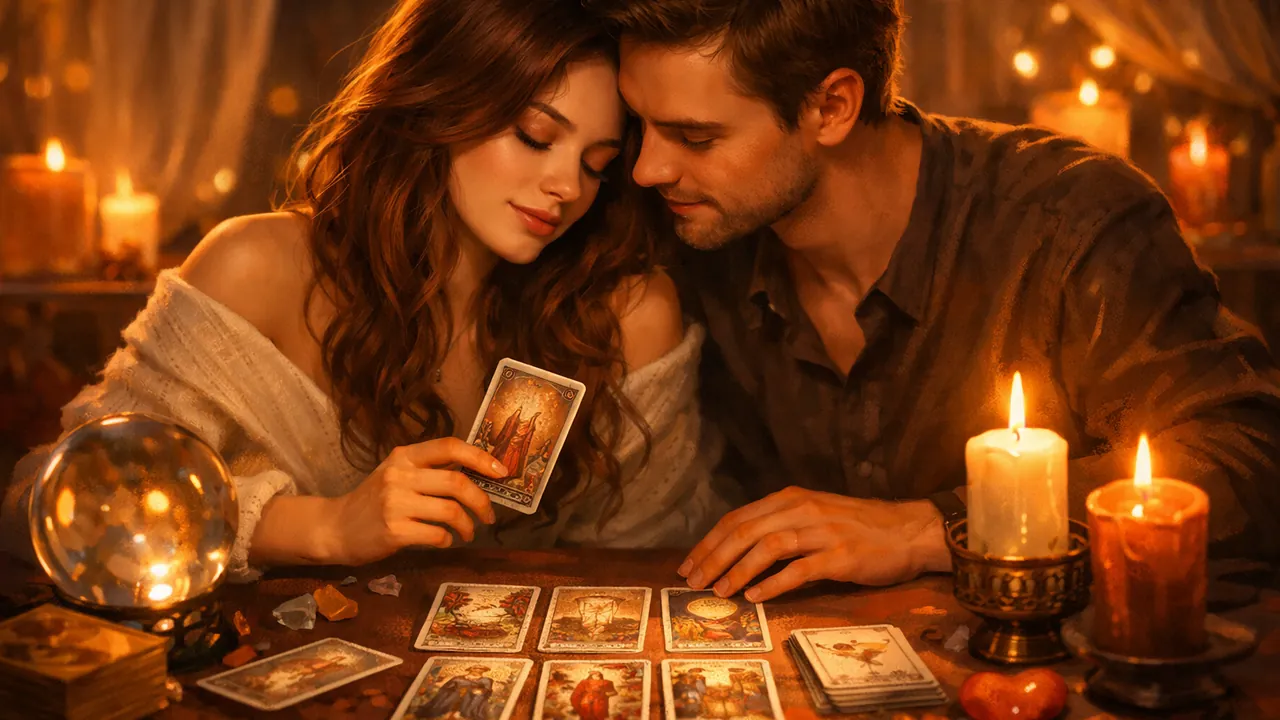
This love tarot reading tutorial walks through several love spreads and card meanings, adding an astrological angle so you can use tarot to look more clearly at where a relationship stands and where it may be heading. Beyond common spreads and reading techniques, it compares tarot with astrology and offers practical tips and use cases, so you can approach love readings with more clarity and confidence.
We cover definitions, differences, suitable situations and practical limits, so you can frame your question clearly before you draw.
The short answer: learning how to read love tarot comes down to choosing a spread that fits your question, reading each card in context, and treating the result as a reflection of current energy. Astrology can add a long-term view of personalities and patterns, while tarot speaks to the present moment. Together they give beginners a practical, grounded way to explore love questions.
Choosing and Using Love Tarot Spreads
Different love questions call for different tarot spreads. Common love spreads include the three-card spread (past, present, future), the cross spread for a deeper look at relationship dynamics, and attraction spreads designed for people who are single. Choosing a suitable spread helps you focus on the core question and get more specific, directional guidance.
For example, a three-card spread works well for a quick read on the current situation and its likely direction, while a cross spread can examine each person's inner needs and obstacles in more detail. Adjust your choice to the purpose of the reading and how complex the question is. Relying on a single spread for everything makes readings less focused and less useful.
Love Tarot Card Meanings in Depth
In love tarot, some cards carry clear emotional symbolism. The Lovers is generally interpreted as choice and union, the Cups suit emphasizes emotional exchange and inner feelings, and The Empress is often read as abundance and the nurturing power of love. Understanding upright and reversed meanings helps you read both the challenges and the openings in a relationship.
The Moon often points to confusion and subconscious influences in love, a reminder to notice inner fears and unease. In practice, card meanings should be combined with the background of the question and the reader's current state rather than read in isolation. That is how you get to the deeper layers of a love situation.
How Tarot and Astrology Complement Each Other in Love Readings
Tarot and astrology each have strengths in love readings. Tarot draws cards at random to reflect present energy and leans on intuition and context, while astrology uses planetary movements and sign traits to describe long-term personality tendencies and relationship themes. Used together, they show both the immediate state of a relationship and its deeper structure.
For instance, astrology can look at how two people's Sun and Venus signs fit together, while tarot offers concrete suggestions for a current difficulty. This cross-system approach gives a fuller picture of a love question, which is especially helpful when the situation is complicated or has several layers.
Practical Tips and Limits of Love Tarot Readings
When doing a love tarot reading, a neutral and open mindset matters most. Try not to bring in strong expectations, and let the cards show the present energy as it is. While shuffling and drawing, keep your attention on the question itself, which helps the card meanings connect with what you are actually feeling.
Still, tarot is not an absolute tool for predicting the future. A reading reflects the possible direction of current energy, and that can shift with your actions and changes around you. Treat the reading as a reference, combine it with your own judgment and choices, and avoid leaning on it too heavily.
When to Use Love Tarot and Who It Suits
Love tarot is useful when you feel lost in a relationship, struggle with a decision, or want to understand yourself and your partner better. People who are single can use spreads to explore attraction and personal themes, while those who are married or in a steady relationship can look at sticking points and ways to improve.
However, if you are dealing with serious emotional trauma or abuse in a relationship, tarot should not replace professional counseling. In that case, seek professional help first, and use tarot only as a supporting tool for self-reflection and emotional balance.
When you are stuck on whether to do something or which way to go, instead of asking for a straight answer, put your options and the one thing you care about most into a single question. Draw three cards to see the overall tendency and what to watch for with each option.
Start a reading with your question