Five of Swords meaning at a glance
Five of Swords upright stands for conflict, the drive to win and a victory that comes at a price, reminding you to weigh the damage to relationships beyond winning or losing; reversed, it can mean admitting mistakes and seeking reconciliation, or resentment that keeps the fight going.
- Upright
- Conflict, winning at all costs, the price paid
- Reversed
- Reconciliation, admitting fault, lingering resentment
- Love
- Stop the hurtful fight to win and see whether trust can be repaired.
- Career & money
- Weigh the cost of competing and don't damage your reputation for gain.
- Yes or no
- Mostly no. Weigh the cost and stop fights that lead nowhere.
The yes-or-no answer is based on the card's general upright meaning; read it together with your question and the other cards.
Five of Swords Meaning Overview: The Price Behind Victory
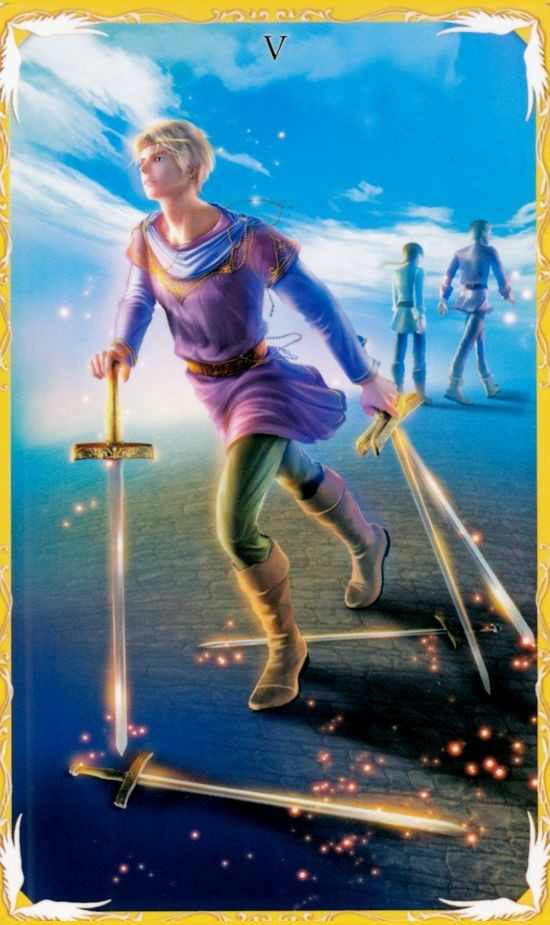
The Five of Swords is one of the most unsettling cards in the Swords suit of the Minor Arcana. On the card, a figure holds three swords and looks smugly at two defeated people walking away, with the weapons they abandoned scattered on the ground. The scene conveys not pure victory but a hollow, even shameful kind of winning: you got what you wanted, but at what cost? The respect of onlookers? The wholeness of a relationship? Or your own conscience?
The Swords suit corresponds to the element of Air and symbolizes thought, language and conflict. Within the suit, the Five of Swords represents the peak of conflict and its aftermath. It is not just a question of winning or losing, but of how you treat others, how you face failure, and whether you can still be at peace with yourself once the fight is over. When this card appears, it often reminds us that some battles, even when won, are a kind of loss.
- Core imagery: a victor holding three swords while two defeated figures walk away
- Element: Air, linked to thought, language, conflict and decisions
- Core themes: hollow victory, the cost of conflict, loss and shame
- Energy of the number five: change, challenge, an unstable turning point
- Common situations: interpersonal disputes, workplace competition, a stalemate after a lovers' quarrel
Five of Swords Upright: You Won, but Was It Worth It?
When the Five of Swords appears upright, the most direct message is that you are in the middle of a conflict, or have just come through one. The fight may end in your "victory," but that victory is not honorable: perhaps you used questionable means, perhaps you hurt someone important, or perhaps you got what you wanted but lost something more precious. The card asks you to honestly ask yourself: was this victory really worth it?
The Five of Swords upright may also mean you are the one who lost: defeated, pushed out, or beaten in an argument. In that case, the card's message is to accept reality and stop clinging. Some battles aren't worth fighting, and some people aren't worth fighting over. Learning to let go and admit defeat is itself a form of wisdom and strength. Holding on will only drain more of your energy into a situation that is already over.
- May represent: a hollow victory, a stalemate after an argument, the frustration of being defeated
- Advice: assess whether this conflict is worth continuing and consider stepping back or making peace
- Warning: victories won by unfair means usually cost more than they are worth in the long run
- Positive side: accepting defeat is a sign of maturity in itself; letting go of fixation lets you move on
Upright in Relationships
In relationships, the Five of Swords upright often points to a tense interaction: arguments, competition, betrayal or hurtful words. You may be in a fierce conflict with someone, or feel targeted or excluded. The card reminds you that even if you have the upper hand in this conflict, you should consider whether the relationship can still be repaired, and whether you are willing to pay the price.
The Psychological Side of the Upright Card: A Test of Self-Honesty
On a psychological level, the Five of Swords upright is a card that asks you to be honest with yourself. Have you ever done whatever it took to win? Have you played the role of the one who hurts in a relationship without being willing to admit it? When this card appears, it is often your subconscious reminding you that it is time to stop deceiving yourself, accept the consequences of your actions, and think about how to truly grow from this experience.
Five of Swords Reversed: Toward Reconciliation or Deeper in the Mire
The Five of Swords reversed has two very different readings, depending on the state you are in now. The first is positive: the conflict is easing, and you or the other person are beginning to set aside pride and seek reconciliation. The past hurt is still there, but both sides realize that continuing to fight will only hurt everyone. This is a chance to rebuild the relationship and start over, which takes sincere communication and give-and-take on both sides.
The second reading is a warning: the Five of Swords reversed may mean you are still stuck in a past conflict and cannot pull yourself out, or that the conflict has ended on the surface while the resentment, shame or self-blame inside has not faded. You may keep replaying the words that hurt you, or feel intense regret about your own past behavior. The card reminds you that real healing requires actively facing these feelings, not suppressing or escaping them.
- Positive reading: the conflict is easing, both sides seek reconciliation, the relationship can be repaired
- Negative reading: still stuck in past hurt, unable to let go of guilt or resentment
- Core lesson: learning true forgiveness, including forgiving yourself
- Advice: reach out and talk, seek mediation, or release pent-up feelings by working through them
The Healing Message of the Reversed Card: Let Go to Move On
On the level of healing, the Five of Swords reversed is a card about letting go. Whether you are the one who hurt someone or the one who was hurt, holding on to past pain will only keep you stuck. When this card appears, it asks you: are you willing to forgive? Not necessarily the other person, but yourself, so you can free yourself from this experience and regain the strength to move forward.
Five of Swords in Love: Hurt and Pain in Relationships
In love readings, the Five of Swords is a card to take seriously. Its appearance often means the relationship is going through, or has just gone through, a major conflict: a fierce argument, a betrayal, a cold war, or one person consistently dominating while the other feels wronged and suppressed. The card is not predicting the end of the relationship; it is reminding you that if these problems aren't faced, the cracks will only grow deeper.
Whether upright or reversed, the Five of Swords in love points to one core question: is the way you communicate in this relationship healthy? Can both of you stay respectful during conflict, or do you habitually hurt each other to win the argument? Real love is not a battle with a winner and a loser; it is two people cooperating to face problems together.
Singles: Is Past Hurt Still Affecting You?
For singles, the Five of Swords may be suggesting that hurt or conflict from a past relationship still affects how you approach new ones. Perhaps you were hurt in your last relationship and are now guarded about intimacy; or you have realized that you played the one who hurt in a past relationship, and that guilt makes you hesitant to start something new. The card advises you to work through these unfinished feelings first, so you can meet new possibilities with a more open heart.
Committed Relationships: Is Conflict a Crisis or a Turning Point?
For those already in a stable relationship, the Five of Swords suggests you are facing an important test. This conflict can be a crisis or a turning point; the key is how you respond. If both of you only think about winning, the relationship will be seriously damaged. But if you can set aside your pride and honestly express your needs and feelings, this conflict may instead become a chance to deepen the relationship.
Breakups and Divorce
In a breakup or divorce, the Five of Swords often means the ending is not peaceful: it may come with arguments, blame, disputes over property or mutual emotional hurt. The card reminds you that even when a relationship has reached its end, how you end it still matters. A "victory" won through hurt will only send both of you away carrying more wounds.
Five of Swords Career and Money: The Dark Side of Workplace Competition
In career readings, the Five of Swords often points to competition, conflict or unfair treatment at work. You may be facing open and hidden rivalries among coworkers, pressure from a manager, or you yourself may have used less than honorable means in a competition. The card reminds you that winning at work matters, but your reputation and relationships are just as much capital for long-term growth, so don't damage them for short-term gain.
In terms of money, the Five of Swords may foretell financial loss or disputes: a business partnership falling apart, a failed investment, or a money dispute with someone. The card advises caution in financial decisions, avoiding unnecessary disputes, and making sure any partnership or transaction has a clear written agreement to protect your interests.
- Workplace warning: watch out for backstabbing and unfair competition at work
- Money advice: put important partnerships in a written agreement and avoid relying on verbal promises
- Direction: assess which battles are worth fighting and which you should walk away from
- Long-term thinking: reputation and relationships are more important assets than short-term wins
Workplace Conflict: How to Handle Unfair Competition
When the Five of Swords appears in a reading about work, it may suggest you are in an environment full of competition and scheming. In the face of unfair competition, the card's advice is to hold on to your moral bottom line and not use means you will regret just to win. At the same time, learn to protect yourself: keep records of important communications, and when necessary seek appropriate support or channels to defend your rights.
Handling Financial Disputes and Losses
On the financial side, the Five of Swords reminds you to be especially careful in any partnership or transaction involving money. If you are currently facing a financial loss or dispute, the card advises you to assess the situation calmly and avoid impulsive decisions while emotions run high. Sometimes accepting a certain amount of loss and cutting it off in time is wiser than staying tangled up in it.
FAQ
Does the Five of Swords mean a relationship will definitely end?
Not necessarily. The Five of Swords represents conflict and its cost, not an inevitable ending. Its appearance reminds you that the relationship is facing a serious test and that both of you need to face the problems seriously. If both of you are willing to set aside pride and communicate honestly, the card may even become a chance for the relationship to transform. What really decides where the relationship goes is how you respond to this challenge, not the card itself.
Is the Five of Swords reversed better than upright?
You can't simply say reversed is better than upright. The Five of Swords reversed has two possibilities: one is that the conflict is easing and moving toward reconciliation, which is indeed a more positive development; the other is that the conflict has ended on the surface, but the inner hurt, resentment or self-blame has not been processed and may keep affecting you in more hidden ways. The reversed card is more of a reminder that surface calm is not the same as real healing, and that your inner feelings need deeper work.
When I draw the Five of Swords, should I keep arguing or back down?
One of the core messages of the Five of Swords is to assess whether this argument is worth continuing. Ask yourself a few questions: even if I win, what do I gain? Is the cost of this argument (damage to the relationship, time and energy spent) worth it? Is the other person likely to change their position? If the answers are all no, backing down or letting go is usually the wiser choice. Sometimes choosing not to fight is the real victory.
If the Five of Swords appears in a career reading, should I worry about being set up by coworkers?
The Five of Swords does suggest the energy of competition and conflict in your work environment, but that doesn't necessarily mean you will be set up. It is more a reminder to stay alert, pay attention to workplace dynamics, and protect yourself in important communications and decisions. Specific advice includes keeping written records of important matters, avoiding sharing too much personal information at the office, maintaining good relationships with coworkers you trust, and knowing when to raise problems with those above you.
How is the Five of Swords different from the Seven of Swords?
Both cards involve dishonorable behavior, but with different emphases. The Seven of Swords focuses more on deception, theft and the strategy of acting alone, an energy of "quietly taking what isn't yours to take." The Five of Swords is more direct: open conflict and confrontation, emphasizing the cost of victory and the shame of defeat. Put simply, the Seven of Swords is hidden scheming and the Five of Swords is an open fight; both remind us to examine the motives and consequences behind our actions.